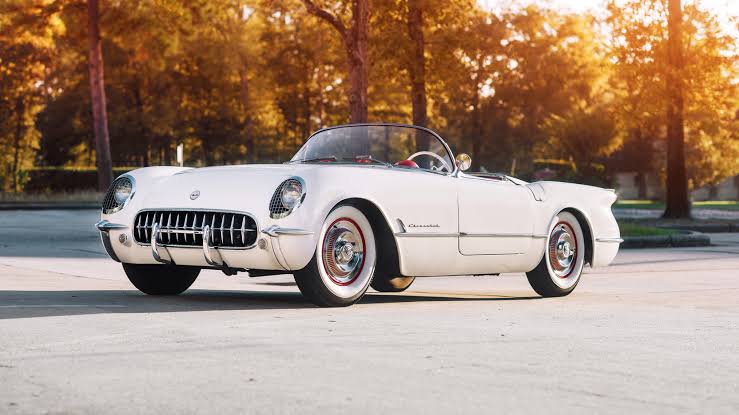
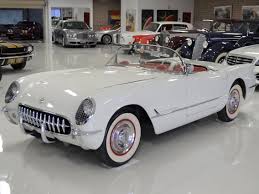
The Chevrolet Corvette of 1954 marked the second year of production for this legendary American sports car. Building upon the foundation established by its predecessor, the 1953 model, the Corvette (1954) showcased notable refinements and advancements that further solidified its position as an icon in the automotive world. Let’s delve into the details of the Chevrolet Corvette (1954) and explore its significance in the evolution of American sports cars.
Design Evolution:
While the overall design of the 1954 Corvette remained true to its predecessor, some subtle changes were made to enhance its aesthetic appeal. One significant alteration was the addition of functional door handles, replacing the previous year’s push-button system. This modification made entering and exiting the vehicle more convenient and added a touch of practicality to the sports car experience.
Additionally, the 1954 Corvette featured revised grille teeth with a more pronounced V-shape, adding a sense of aggression to the car’s front end. The body lines remained sleek and streamlined, maintaining the timeless elegance that characterized the Corvette’s design language. Available in Polo White, the sole color option for that year, the Corvette’s pristine exterior emphasized its status as a high-performance machine.
Power and Performance:
Under the hood, the 1954 Corvette retained the same powertrain configuration as its predecessor. It was equipped with a 3.9-liter inline-six engine, producing 150 horsepower, and mated to a two-speed Powerglide automatic transmission. While the engine performance remained unchanged, Chevrolet engineers focused on refining the vehicle’s drivability and handling characteristics.
One notable improvement was the introduction of a stiffer suspension system, resulting in improved ride quality and enhanced stability. This refinement allowed drivers to better harness the Corvette’s power and navigate corners with greater confidence. The lightweight fiberglass body and balanced weight distribution continued to contribute to the car’s nimble and agile nature, making it a joy to drive on both open roads and winding stretches.
Production and Rarity:
The production numbers for the 1954 Corvette increased compared to the previous year, with 3,640 units rolling off the assembly line. However, even with the higher production figures, the 1954 Corvette remains a relatively rare and sought-after model among collectors and enthusiasts. Its limited production run, coupled with its historical significance as one of the earliest Corvette iterations, adds to its desirability and value.
Enduring Legacy:
The Chevrolet Corvette (1954) played a crucial role in establishing the Corvette as an enduring symbol of American automotive excellence. It showcased Chevrolet’s commitment to continuous improvement and refinement, setting the stage for the remarkable advancements that would follow in subsequent generations. The 1954 Corvette’s elegant design, improved handling, and unmistakable presence on the road solidified its place as a highly coveted classic sports car.
In Conclusion:
The Chevrolet Corvette (1954) represents a significant milestone in the Corvette’s evolutionary journey. With its refined design, improved suspension, and dedication to enhancing the driving experience, the 1954 Corvette further cemented the model’s status as a revered American sports car. Today, this particular iteration of the Corvette remains a cherished collectible, reminding us of its enduring legacy and the pivotal role it played in shaping the future of American automotive design and performance.
 vintage auto